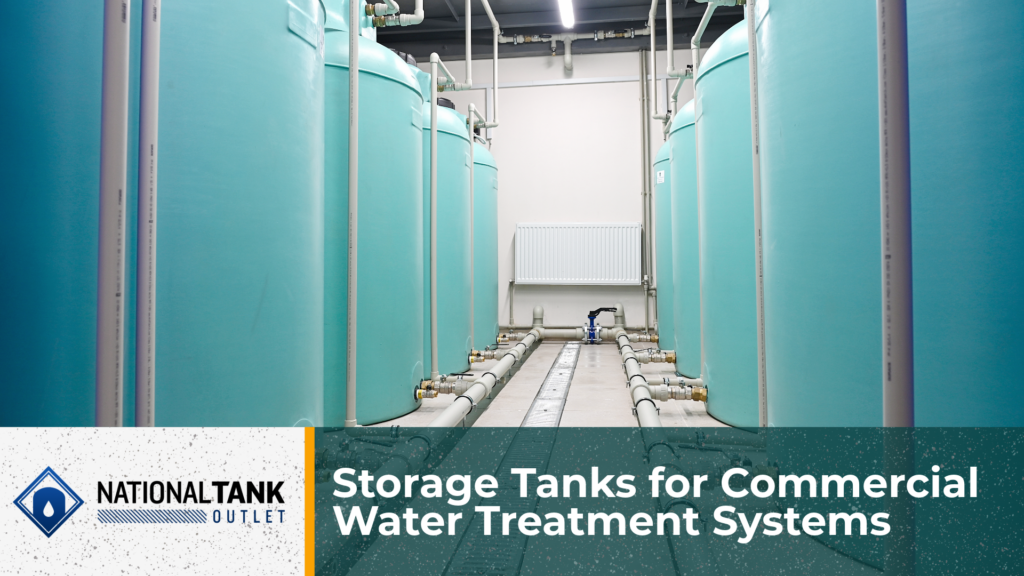
In the world of commercial operations and businesses, high quality, reliable water is a central player, keeping workflows and amenities running while most people never notice. Behind every steady tap, full feature, and seamless work cycle is a silent workhorse: the storage tank. Whether you manage a manufacturing plant, industrial facility, hotel, or a high end restaurant, learning the role these tanks play in an onsite water treatment system can position you to keep your applications flowing smoothly and safeguarded. Modern storage tanks are tools used throughout the water treatment cycle. They are used to contain raw water for treatment, manage precise chemical dosing, store treated water for final distribution, and hold emergency reserves.
However, managing water resources on a commercial scale can come with its share of challenges. Facility managers must balance the risks of operational downtime, strict regulatory compliance, and increasing pressure to minimize potential environmental impact. A failure in storage infrastructure can lead to costly interruptions and safety hazards. Advances in tank technology, like high density polyethylene (HDPE), fiberglass, and seamless designs, are providing reliability to solve these challenges. With growing demand for effective and sustainable water management, selecting the right storage solution has become a strategic priority for commercial enterprises looking to secure their operations and future proof their infrastructure.
The Role of Storage Tanks in Commercial Water Treatment
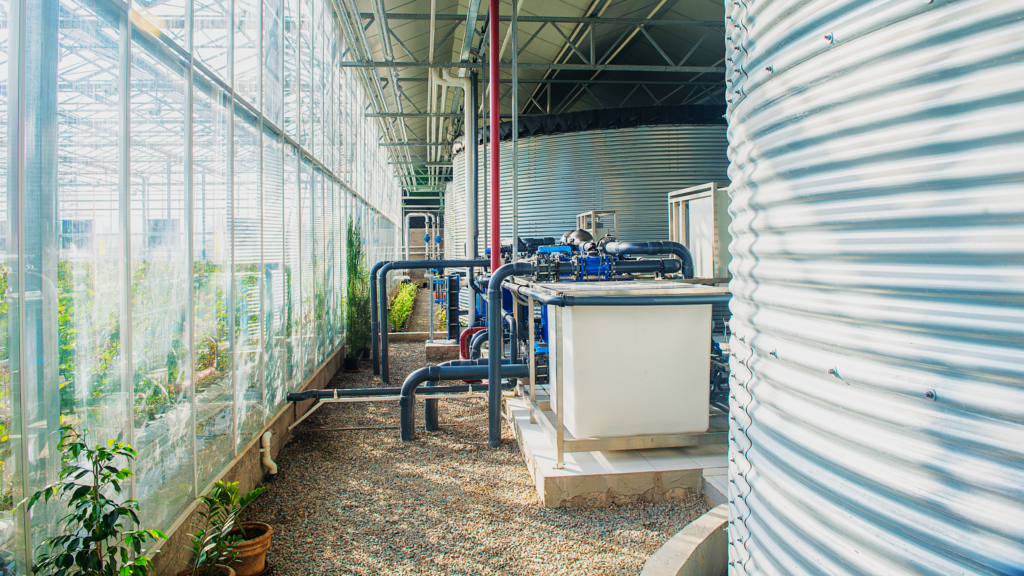
In commercial water treatment systems, storage tanks are used as passive reservoirs and as active parts of purification and distribution. From the moment water enters a facility to its onsite usage, HDPE tanks safely keep jobs moving, lines producing, and water available for infrastructure that needs it. Understanding their roles can help facility managers achieve excellent system performance and reliability.
Raw Water Storage
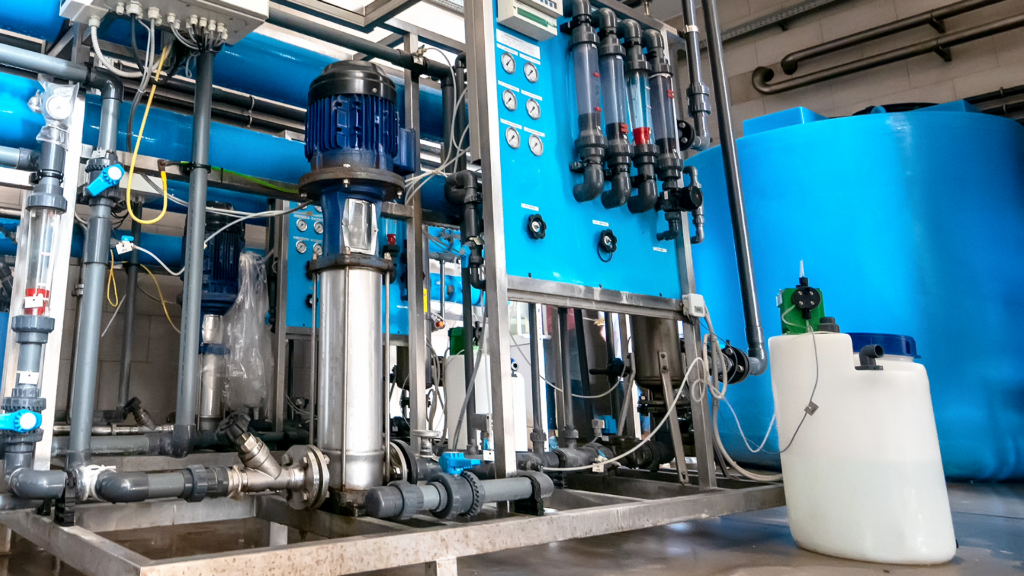
Before treatment begins, incoming water—whether from municipal lines, wells, or natural bodies of water—must be collected and stabilized. Raw water storage tanks act as the initial buffer between the source, the filtration system, and the end use. By stabilizing flow rates, these tanks keep surges from overwhelming sensitive filters, ensuring a steady stream for processing. Large raw water tanks also provide an opportunity for initial sedimentation, where larger solid particles can settle out before the water enters more sensitive processing stages.
Chemical Storage and Dosing
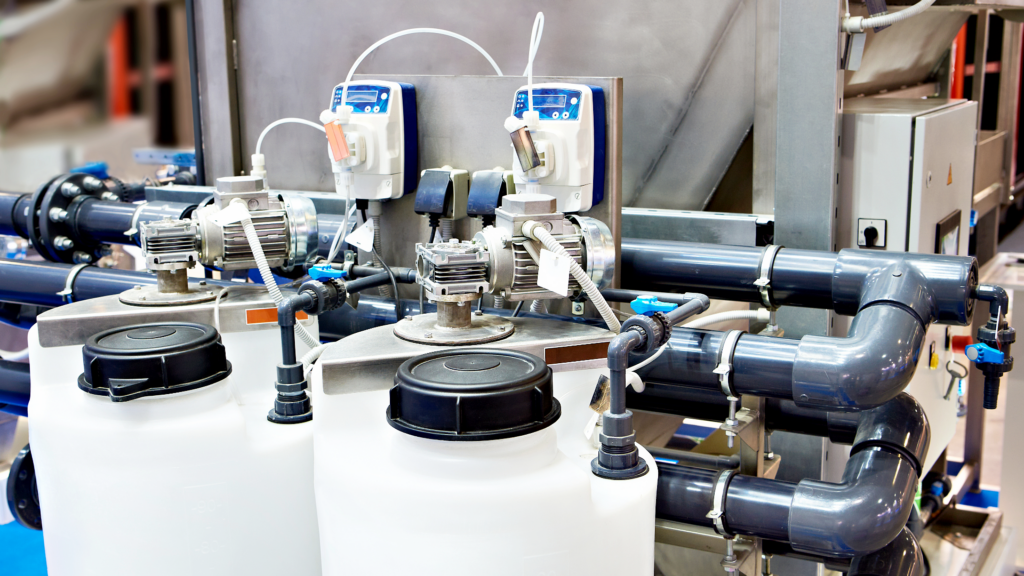
Clean water results rely on precise chemistry and good treatment equipment. Commercial treatment systems use various chemicals to neutralize contaminants, balance pH, and sanitize the water supply such as sodium hypochlorite, hydrochloric acid, and coagulants. Storing these substances safely requires specialized chemical tanks built from corrosion resistant materials to prevent leaks and leaching. When integrated with dosing pumps, these tanks can inject chemicals accurately into the water stream, filtration setup, or holding tank to reach needed quality levels.
Treated Water Storage
After stabilization and purification, water needs to be safely stored and have its quality maintained up until its use. This is where treated water storage tanks are used to hold the “finished product” and make sure a consistent supply is available to meet fluctuating commercial demands. Such storage tanks are central for managing peak usage times and allowing the treatment system to run at a steady rate while supplying the extra demand for the facility. To protect water quality, the tanks must be sealed from airborne contaminants. made from food grade materials and be NSF/ANSI certified.
Backup Water Storage
Commercial operations know reliable infrastructure is a major concern. A break in the municipal supply line or a scheduled maintenance outage can bring business to a halt. For high stakes operations like healthcare, hospitality, and data centers, downtime is a disaster. Backup water storage tanks or emergency reserves act as a strategic insurance policy that allows a facility to continue service during supply interruptions.
For industries like hospitality, healthcare, and data centers, where water availability is non-negotiable, these tanks are a vital insurance policy against costly downtime. By securing a dedicated reserve, you can ensure that “business as usual” remains a reality.
Recycled Water Storage
Sustainability continues to evolve into a core business objective, especially for large companies. And so, many commercial facilities are choosing to add graywater and wastewater recycling systems to reclaim and repurpose spent water. Recycled water storage tanks are used to hold treated wastewater or collect rainwater. This recycled water can then be used for non-potable applications such as irrigated landscapes, flushing toilets and urinals, or as part of cooling tower make-up systems. By using this water instead of the potable supply, dedicated recycled water tanks can help businesses reduce their freshwater consumption while lowering utility costs and contributing to environmental goals—and show that stewardship is more than just talk.
Emergency Preparedness
Water storage tanks can do more than just support daily workflows and company grounds—they can be a lifeline during a crisis. Dedicated fire protection tanks provide an immediate, high volume water supply for suppression systems that can be designed to operate independently of municipal lines should they fail due to shortages, system stress, or pipeline fractures. In disaster recovery scenarios, storage tanks can provide emergency drinking water for personnel or residents that can turn a commercial facility into a safe harbor.
Types of Storage Tanks for Commercial Water Treatment
The effectiveness of a system and the longevity of its equipment depend on one decision: selecting the right storage tanks. In commercial water treatment, there is no one-size-fits-all solution, and commercial operations often use an array of tank types. Each tank must be engineered to accommodate distinct pressure requirements, space limitations, accessibility, and chemical compatibility. Understanding the unique characteristics of these tanks allows facility managers, engineers, and procurement officers to match the right equipment to their specific treatment needs.
Atmospheric Storage Tanks
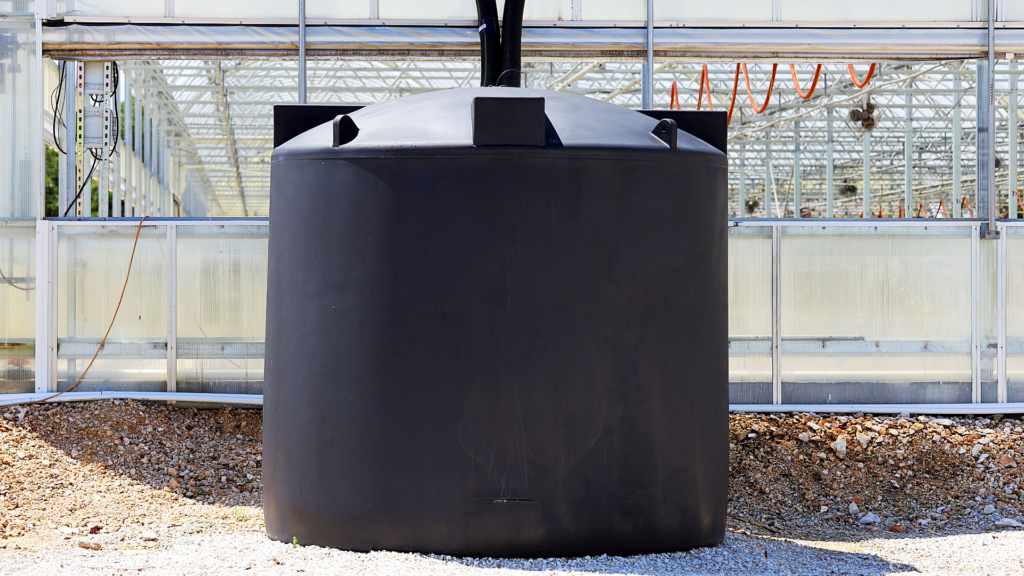
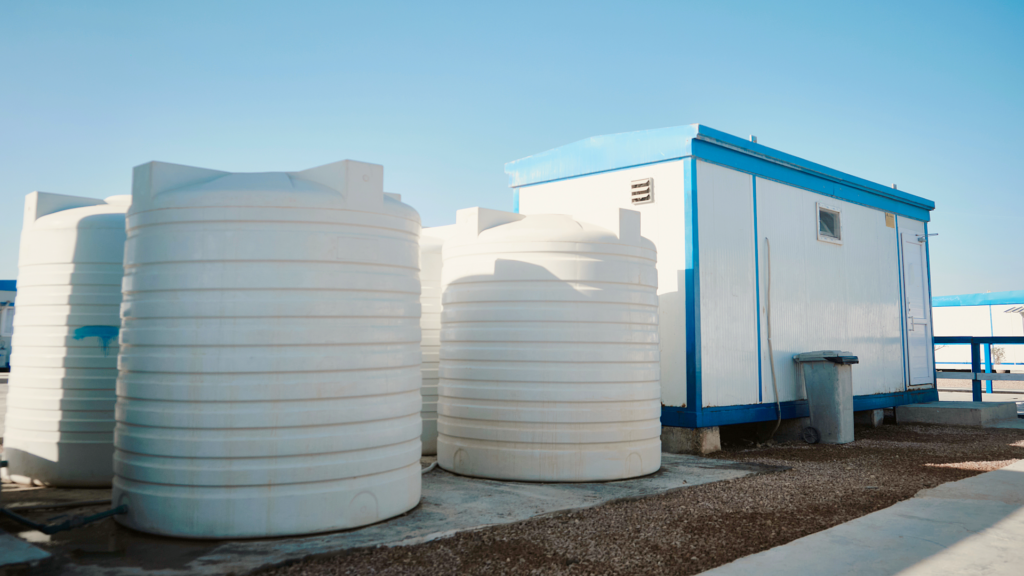
Atmospheric storage tanks are the industry standard solution for general utility applications where system pressure isn’t a factor. These vessels operate at ambient pressure and those made from high density polyethylene (HDPE) or fiberglass are often used. Their seamless construction eliminates potential leak points common in welded or bolted tanks, making them a reliable, low maintenance solution for high volume storage needs. These tanks are lightweight yet resilient and more cost effective than steel tanks. Overall, HDPE plastic tanks and fiberglass tanks make an excellent choice as an atmospheric storage tank for the bulk storage of raw water or finished potable water.
Pressurized Storage Tanks
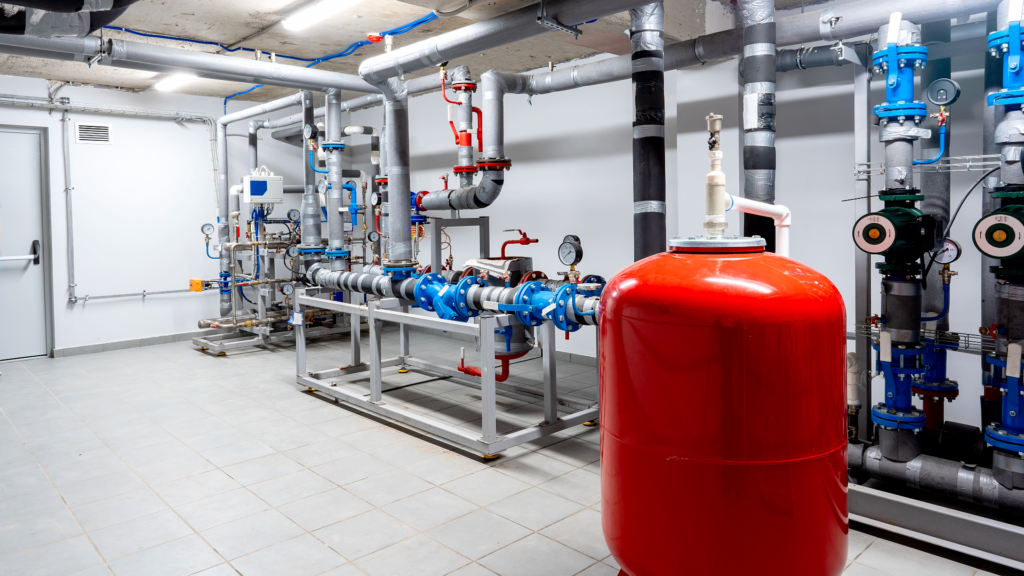
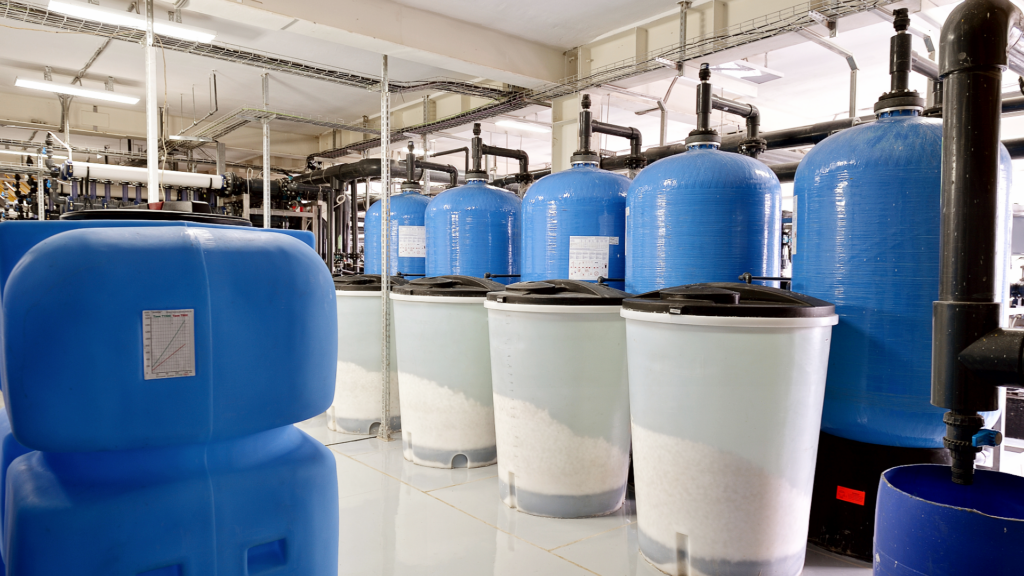
Pressurized storage tanks are essential parts of high purity water systems, especially those that use reverse osmosis (RO) or hydro-pneumatic delivery. Unlike atmospheric tanks, these vessels are completely sealed to maintain system pressure and protect the water from potential airborne contaminants.
They often use an internal bladder or diaphragm that separates the water from a cushion of compressed air, which can allow water to be distributed without the need for additional booster pumps. This makes pressurized storage tanks a key part in consistent flow and pressure for sensitive commercial applications like laboratory water systems or beverage production. And at the same time, simplifying system design while ensuring purity and performance.
Cone Bottom Tanks
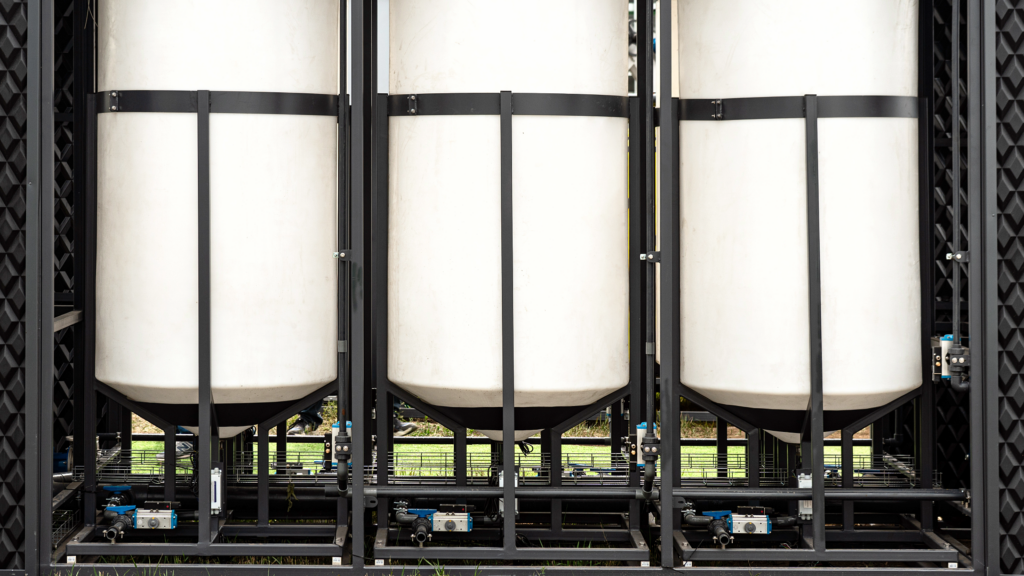
When an application requires complete drainage or involves the mixing of heavy solids and slurries, standard flat bottom tanks are often a suboptimal choice. Conical tanks, also known as cone bottom tanks, are designed with a funnel shaped base that consistently delivers full discharge of the tank’s contents through the outlet valve at the bottom.
This design is particularly beneficial to chemical dosing stations or flocculation applications where sediment or undissolved chemicals could build up in a flat tank. By providing 100% drainage, cone bottom tanks simplify cleaning tasks and prevent cross contamination between batches.
Double Wall Tanks

Safety is top priority when storing hazardous treatment chemicals such as sulfuric acid, caustic soda, or high concentrations of chlorine such as sodium hypochlorite (bleach). Double wall tanks offer built-in secondary containment for immediate spill control through its unique “tank-within-a-tank” design system.
If the inner tank is ever compromised, the outer shell automatically contains the leak, preventing dangerous chemicals from escaping into the environment or the facility floor. This design of the double wall tank improves personnel safety and simplifies compliance with EPA and local regulations regarding hazardous material storage without the need for external concrete berms.
Custom Tanks
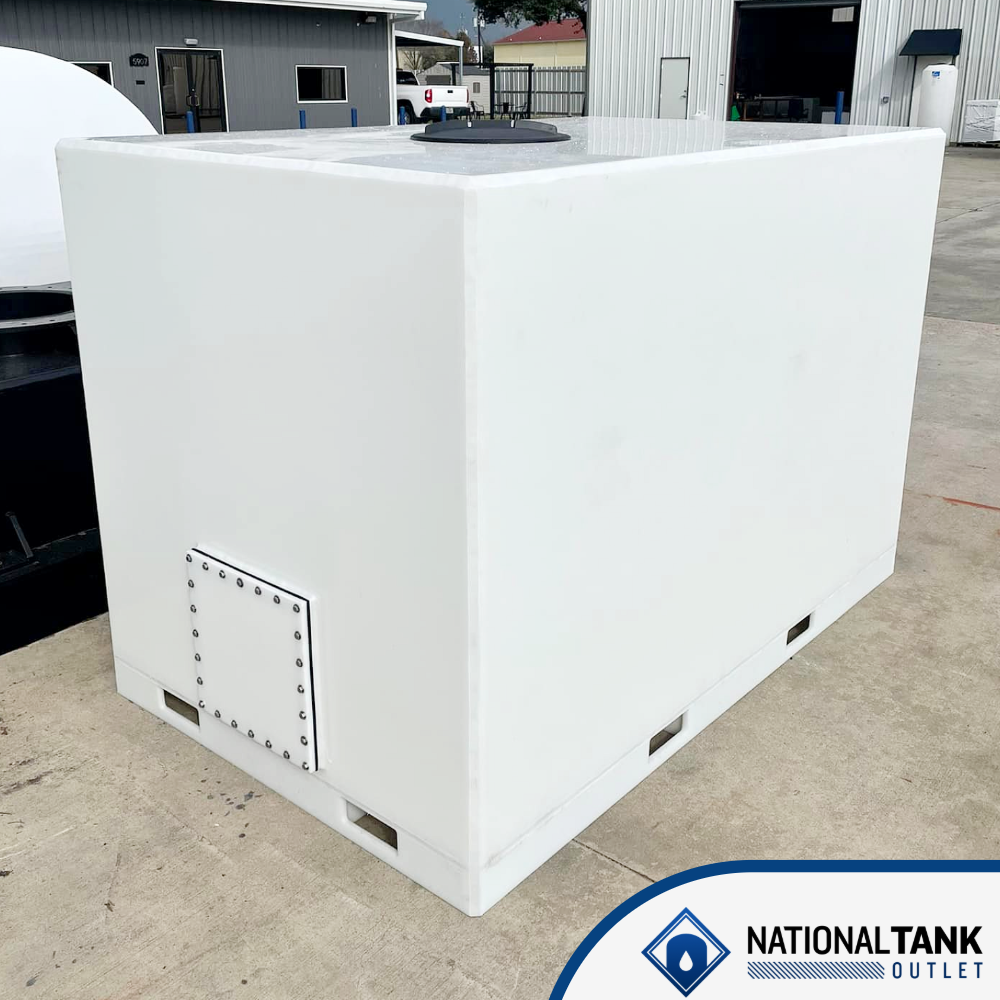
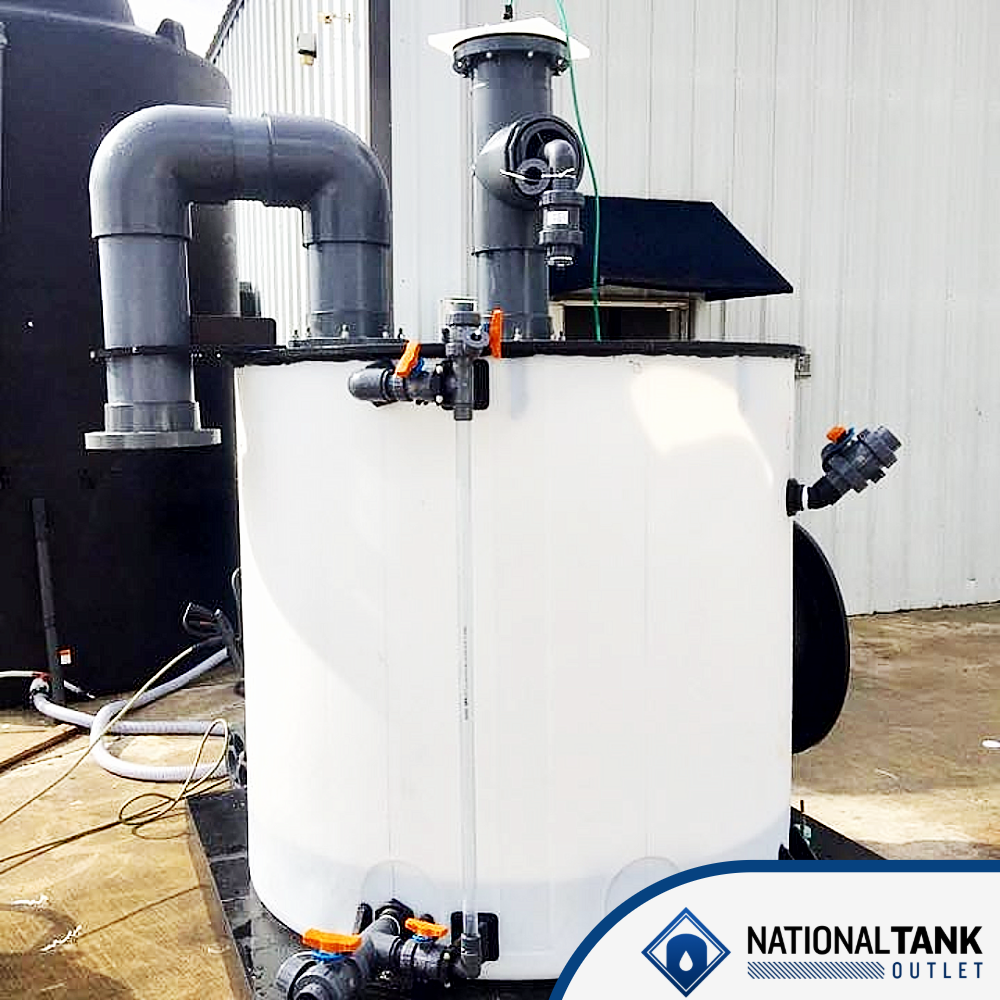
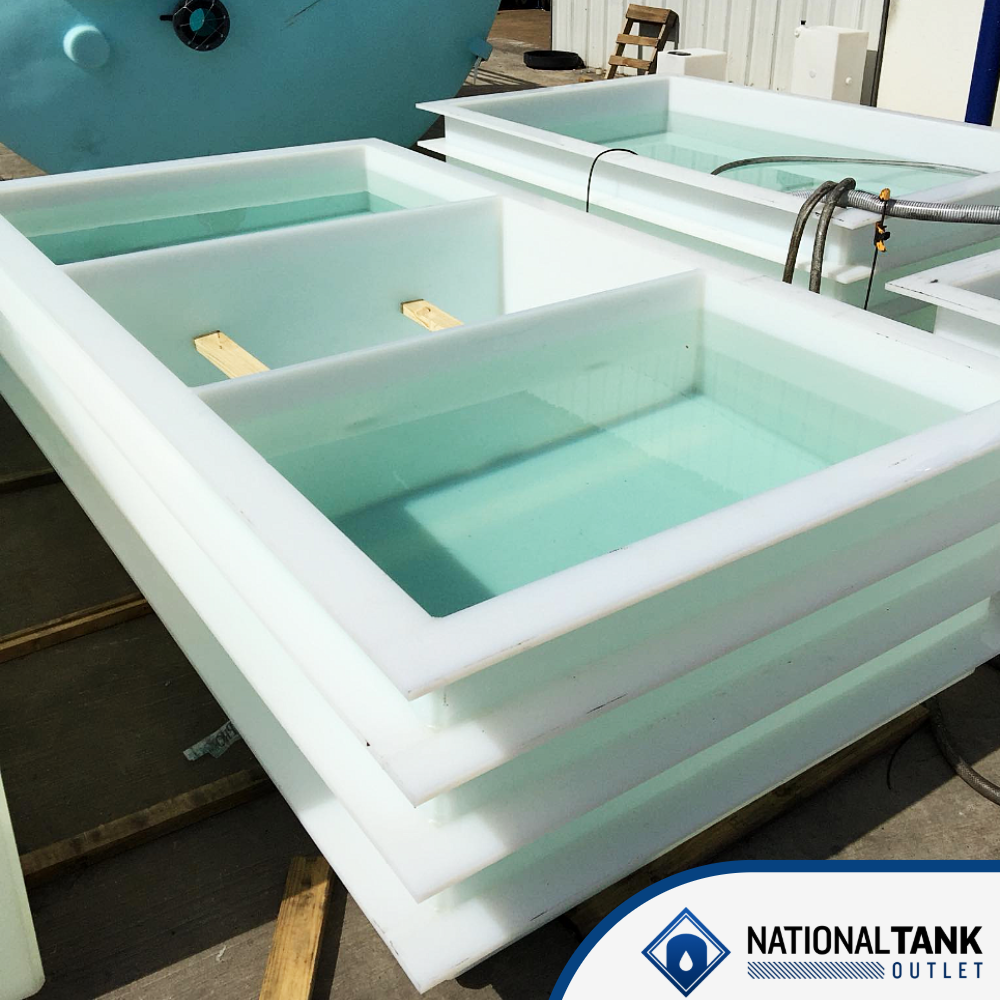
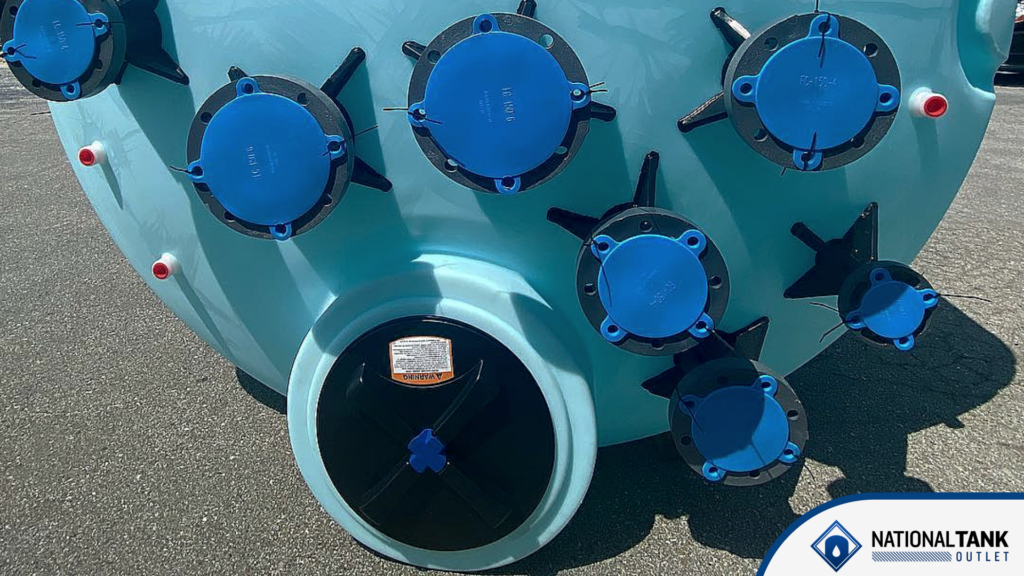
Commercial water treatment systems often require specialized setups or components. Custom tanks offer made to order solutions built around a company’s unique operating needs. For outdoor installations exposed to harsh sunlight, tanks can be manufactured with UV stabilized resins and covered with a weatherproof coating to prevent material degradation. Customization also extends to the strategic placement of fittings, manways, and sensor ports to ensure the tank can be integrated seamlessly into existing piping and monitoring infrastructure. Whether a facility requires a specific rectangular footprint to fit through a narrow doorway or specialized coatings for highly corrosive liquids, custom fabricated tanks ensure the vessel meets the exact specifications of the project.
Modular and Collapsible Tanks
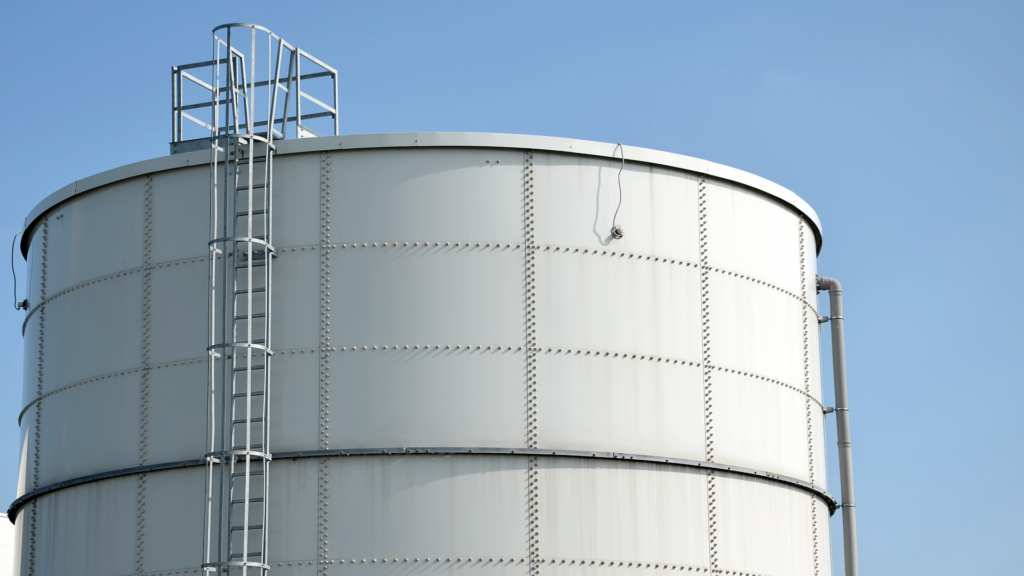
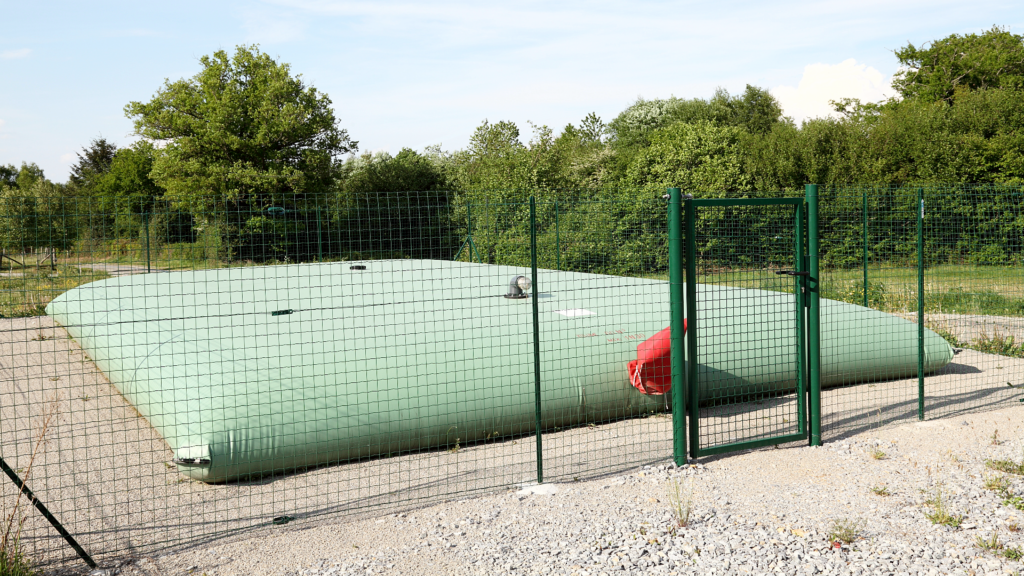
When space is tight or your water storage needs are temporary, modular and collapsible tanks can meet the flexibility needs. Modular tanks, such as bolted steel tanks, can be built on-site from individual panels to allow high capacity storage to fit into awkward spaces like basements or rooftops that traditional tanks can’t reach. For emergency response or short term construction projects, collapsible “pillow” tanks are an option. These durable, flexible units can be rapidly deployed, filled for immediate use, and then drained, folded, and stored compactly once the job is done.
Top Points When Choosing a Storage Tank
Choosing the right storage tank for a commercial water treatment system is a strategic decision that can have lasting impacts on how smoothly daily operations run, overall area safety, and a business’s long term costs due to maintenance or recurring expenses. A thorough evaluation of several points will make sure the chosen tank will meet current demands and provide lasting value. And by considering the science behind the materials, future growth potential, legal regulations, and specific maintenance needs, you can make a knowledgeable decision on a well-matched investment that strengthens your entire water management infrastructure for years down the line.
Material Compatibility

Compatibility between the tank material and the liquid it will store is often the first and most essential point to consider when choosing a storage tank. It is a fact that different materials offer different levels of resistance to different types of corrosion and chemical attack.
- High Density Polyethylene (HDPE): A common, modern material choice that offers balanced protection against a range of chemicals common to water treatment, including acids and bases like sodium hypochlorite. Quality poly tanks will have a seamless, one-piece molded construction that provides superior structural durability and leak avoidance.
- Fiberglass (FRP): Common for water storage, fiberglass tanks can be made to size and offer excellent strength-to-weight ratios, making even small tanks lightweight and durable. They can be formulated for specific chemical applications.
- Stainless Steel: Best suited for high temperature or high purity applications due to cost, but can be vulnerable to corrosion from chlorides.
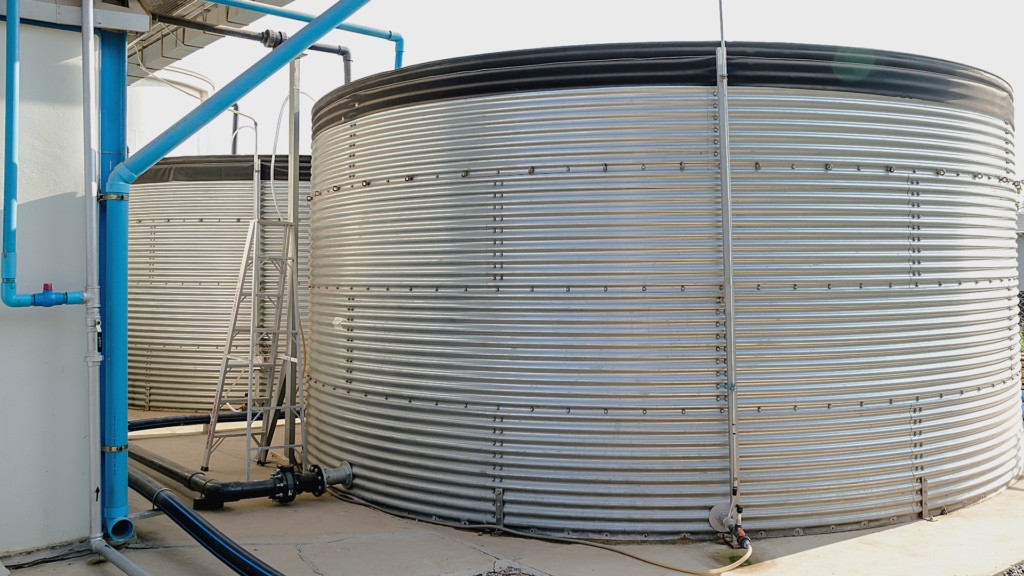
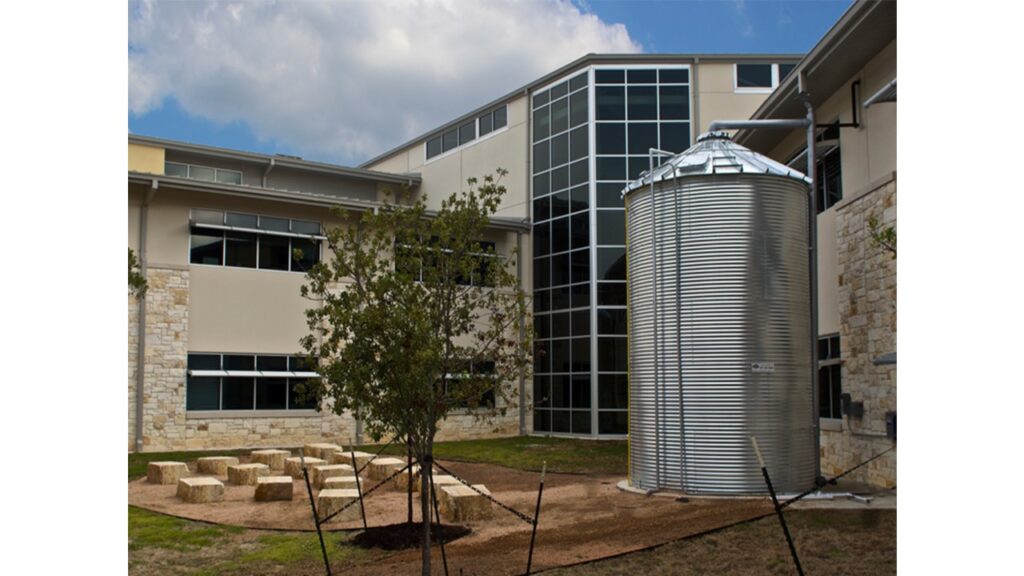
- Corrugated Galvanized Steel: High capacity tanks best suited for applications requiring greater than 20,000 gallons of water storage, galvanized steel tanks typically feature a potable water certified


Capacity and Scalability

A storage tank should be sized to support a business’s daily operational needs and future growth. An undersized tank may create bottlenecks in the treatment process, while one that is oversized can lead to unnecessary costs and the potential for water quality issues due to long holding times.
To get it right, evaluate peak demand, required buffer capacity, and future growth projections. A certified engineer may be necessary here to properly size a tank and system. Opting for a slightly larger tank or a modular system can provide the scalability needed to adapt to increased water demands without needing a complete system overhaul.
Regulatory Compliance

Commercial water treatment is a heavily regulated field. To avoid legal fines and liabilities, storage tanks must comply with numerous industry and government standards. Rather than simply a headache, these are to protect human safety and the environment.
For potable water applications, those where people will drink the water, tanks must be NSF/ANSI 61 certified to guarantee that no harmful chemicals will leach into the drinking water. When certain chemicals need to be stored, facilities may need to meet EPA guidelines and local spill containment rules. Choosing pre-certified tanks designed to meet these specific codes is the smartest way to streamline compliance and secure your operations.
Durability and Longevity

Bulk volume storage tanks are long term assets, and the lasting durability of the product is non-negotiable for a positive return on the investment. The tank must be rugged enough to withstand potential exposures to physical and environmental stresses of where it’s installed.
For outdoor sites, plastic tanks with built in UV inhibitors are necessary for sun protection. The tank’s construction should also be evaluated for its ability to handle constant hydrostatic pressure and potential impacts. Professional grade tanks made using high quality materials and manufacturing contribute to a longer service life and reduced the frequency of costly replacements.
Customization Options

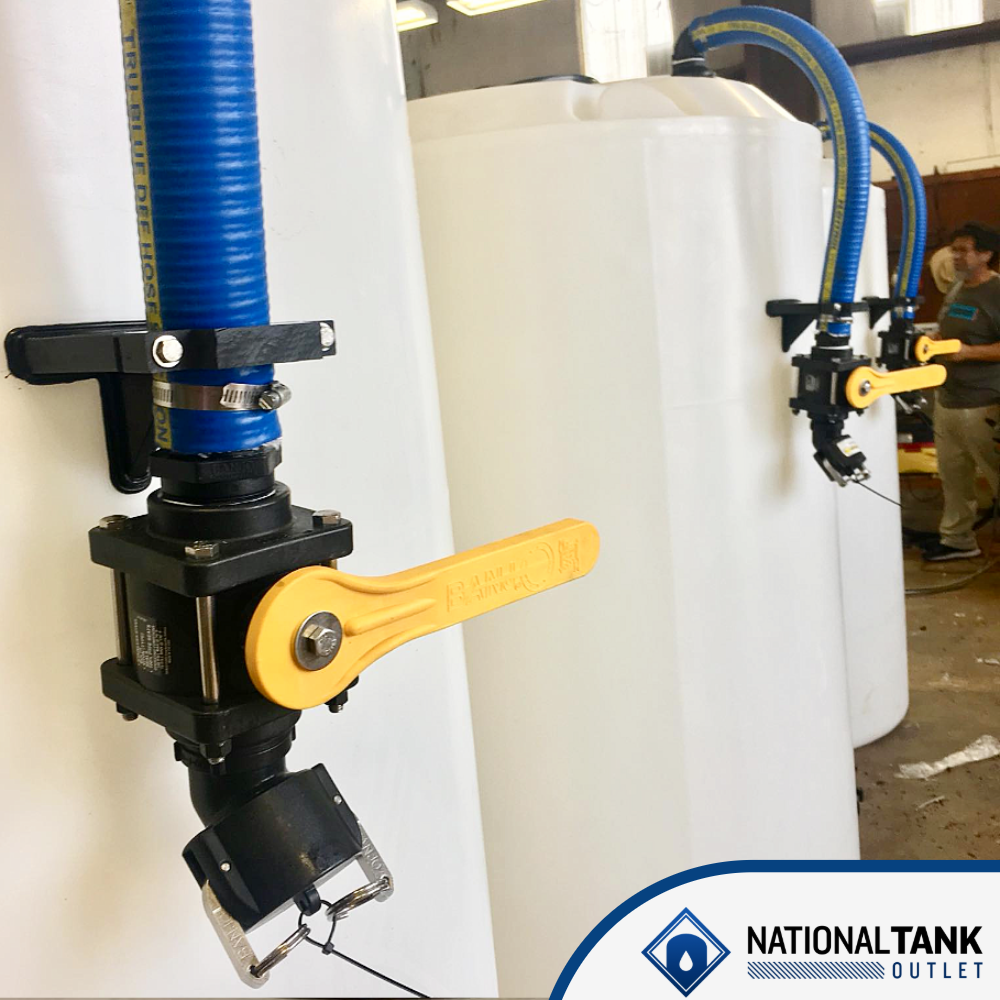
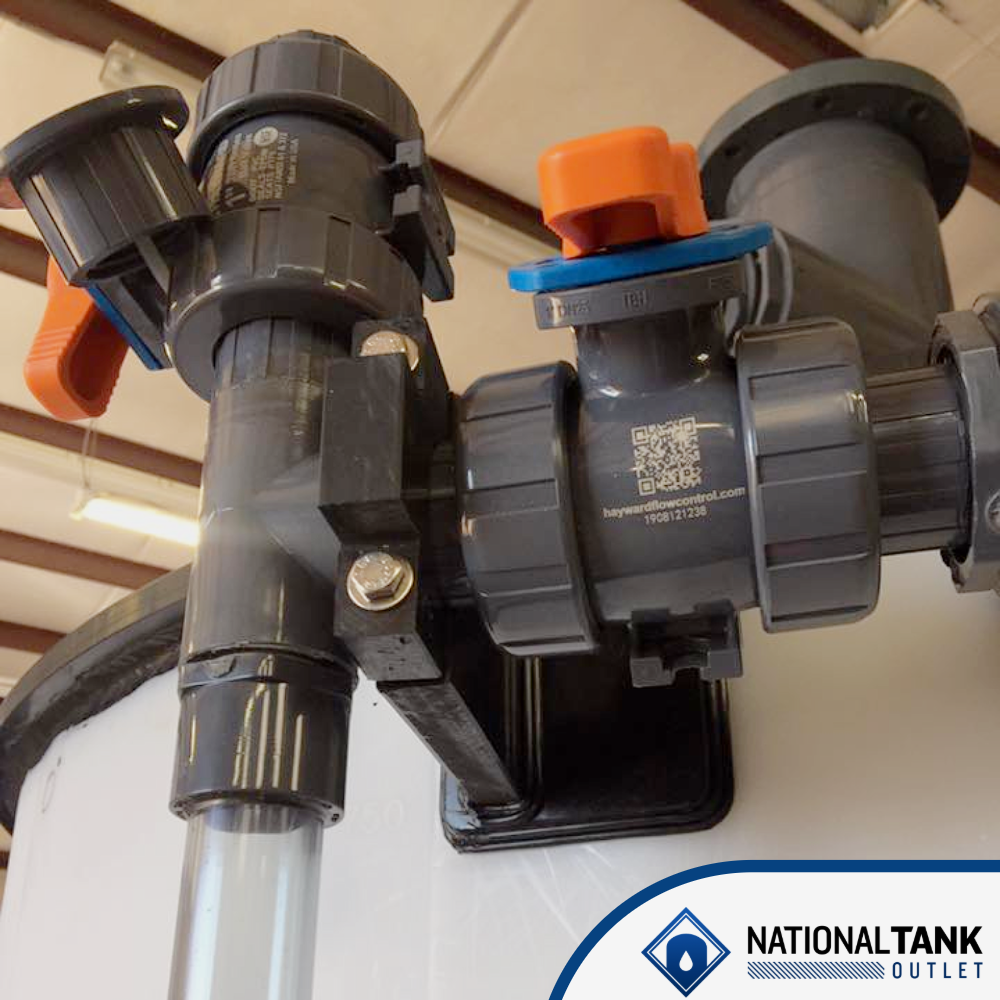
Standard, off-the-shelf tanks may not always integrate perfectly with a complex commercial system. Customization allows a tank to be tailored to specific operational requirements. This can include adding specialized fittings, nozzles, and manways at precise locations to match existing plumbing.
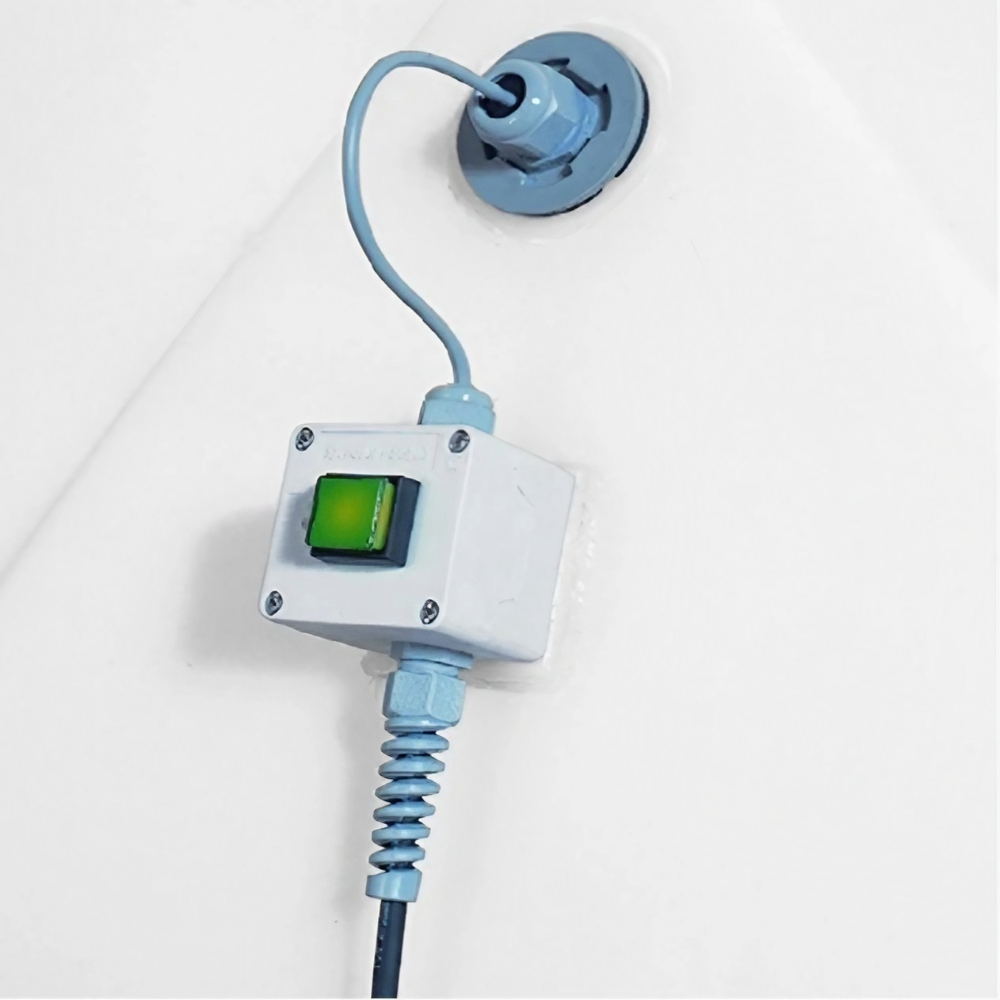
Other common options include adding internal baffles for better mixing, sight gauges for visual level monitoring, or specialized coatings for high temperature liquids. These modifications can significantly improve your business’s workflow and system performance.
Maintenance Requirements

Tank maintenance can require downtime, which can also halt operations if backups are not in place. Some tank types and designs are easier to clean and less likely to harbor bacteria or allow sediment to build up. HDPE tanks have smooth, seamless interiors that resist algae and biofilm growth, which can cut down on cleaning frequency. Features like easy access manways and well placed drainage ports simplify inspections and maintenance.
Tank Monitoring Systems

In modern commercial facilities, automation and data are often requirements or desirable for the optimization they offer and record keeping. Smart storage tank systems with integrated monitoring systems now offer real time insights into liquid levels, temperature, and leaks.
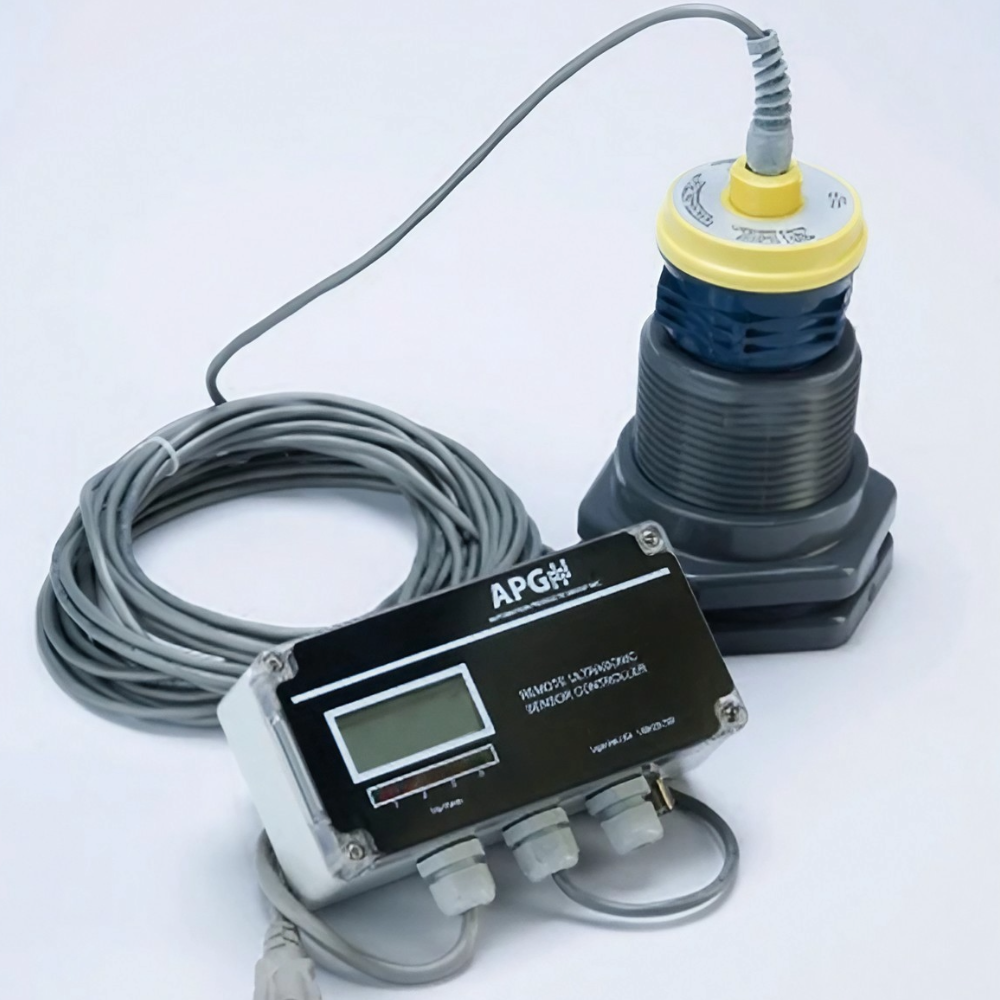
Level sensors can automate pump controls to prevent overflows or dry runs. Leak detection systems provide an immediate alert if a breach occurs and allow swift corrective action. Tank monitoring systems are a safety and efficiency mechanism that can reduce the need for manual checks, streamline operations, and provide valuable data for process improvement.
Where Storage Tanks are Used in Commercial Water Treatment
Modern storage tanks are versatile products that are suitable for water treatment systems across various industries. While their main job is containment, their specific uses vary and can adapt to different applications and business needs. Whether it’s keeping guests comfortable and happy or safeguarding servers in data centers, ese tanks are trusted to deliver dependable water management for commercial success.
Hospitality Industry
For hospitality businesses like hotels, resorts, and large restaurants, poor water quality can directly impact guest experience for a less than flawless review. When onsite water treatment is necessary, such as due to poor public water quality from high mineral quality or chemical contamination, storage tanks provide a consistent supply of clean, potable water for guest rooms, swimming pools, and kitchen operations. During peak hours—such as morning showers or dinner service—municipal pressure can also fluctuate. In these cases, onsite storage tanks act as a buffer to keep water on-hand for consistent water flow and pressure. Similarly, commercial laundry operations rely on large volumes of treated, softened water that can be stored in dedicated tanks from an onsite system to protect linens and extend equipment life.
Healthcare Facilities
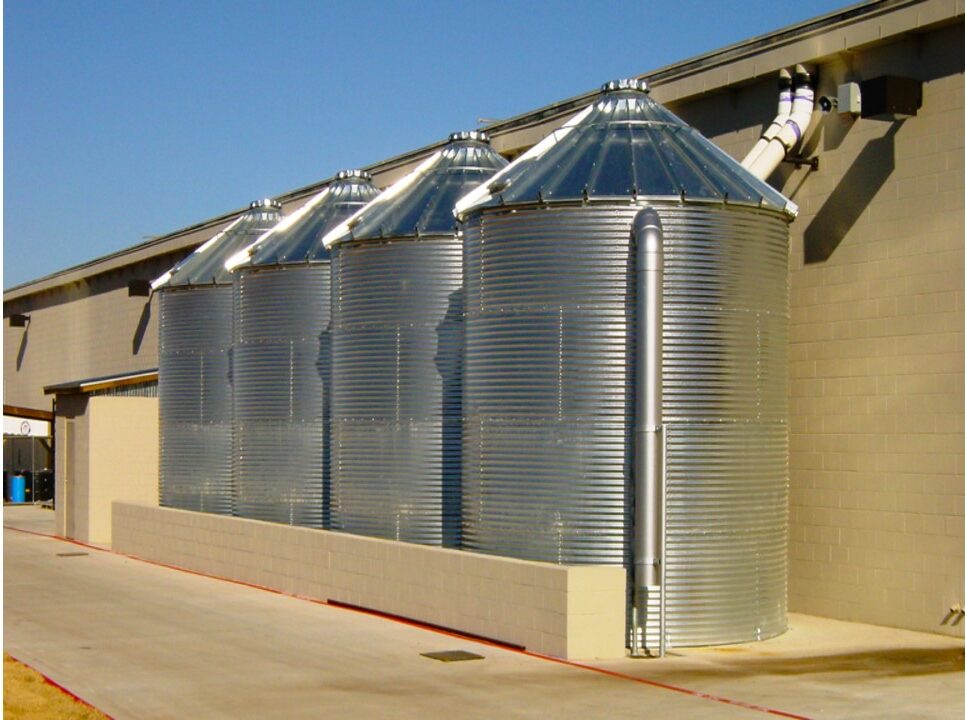
In hospitals and clinics, water purity is a matter of patient safety. Healthcare facilities use specialized storage tanks to hold high purity water for sterilization units, dialysis machines, and laboratory testing. To prevent bacterial growth and contamination, these tanks must meet rigorous sanitary standards. Hospitals are also often required by legal codes to maintain emergency water reserves. Large storage tanks such as galvanized steel water tanks can meet these reserve needs to stockpile water so patient care, sanitation, and HVAC cooling can continue uninterrupted even during municipal supply failures.
Manufacturing and Industrial Plants
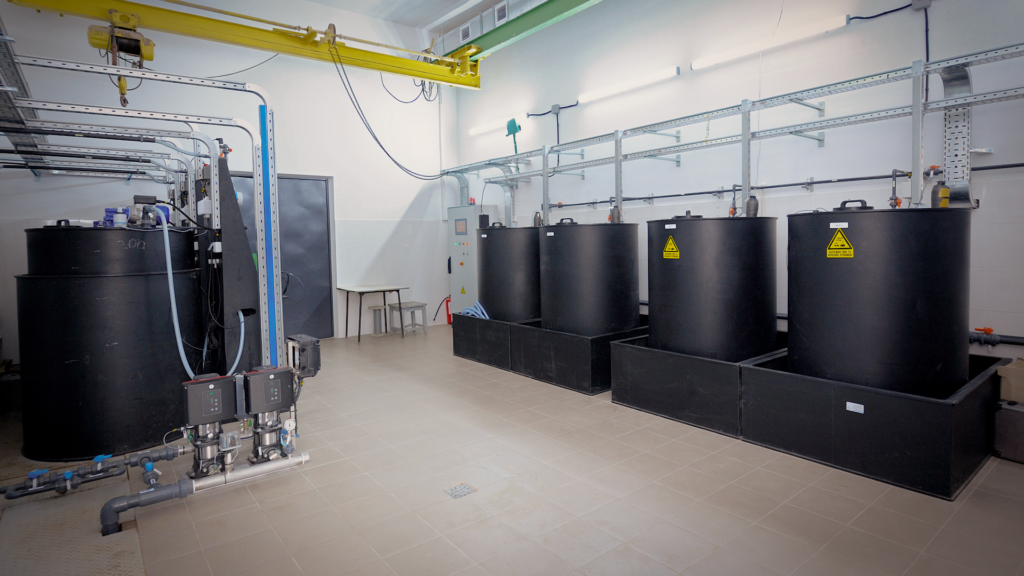
Industrial companies use water for everything from cooling heat-generating machinery to diluting and mixing chemical compounds. Manufacturing plants use storage tanks to hold process water so it can be treated to specific quality requirements for production lines. Cooling towers rely on makeup water often stored in large tanks to regulate temperature and prevent overheating. In chemical processing, tanks designed for aggressive materials safely house acids, bases, and solvents used in cleaning or manufacturing to protect the crew, equipment, facility, and environment.
Agriculture and Irrigation
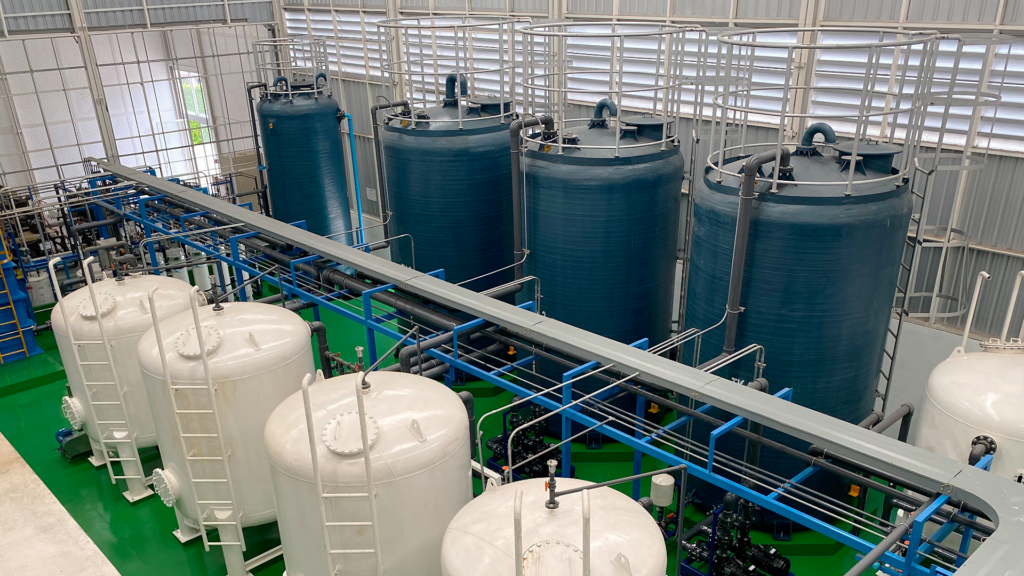
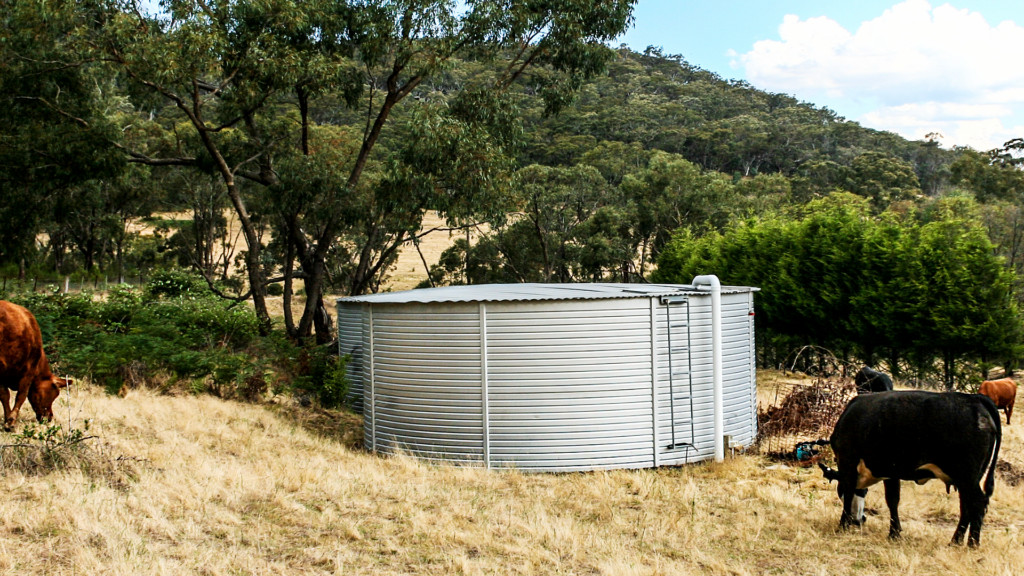
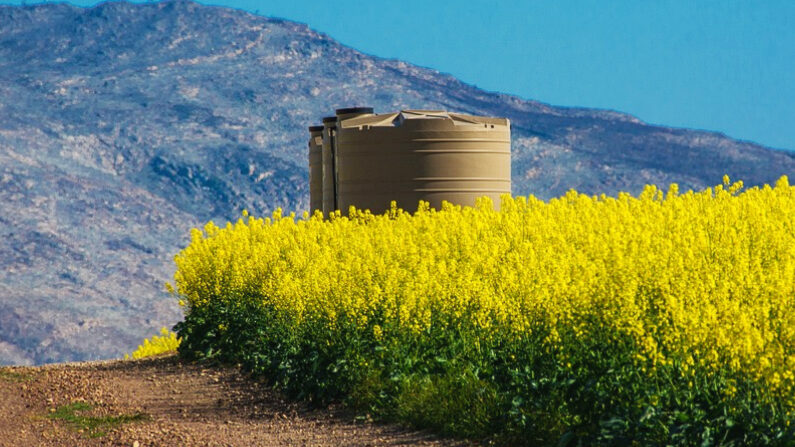
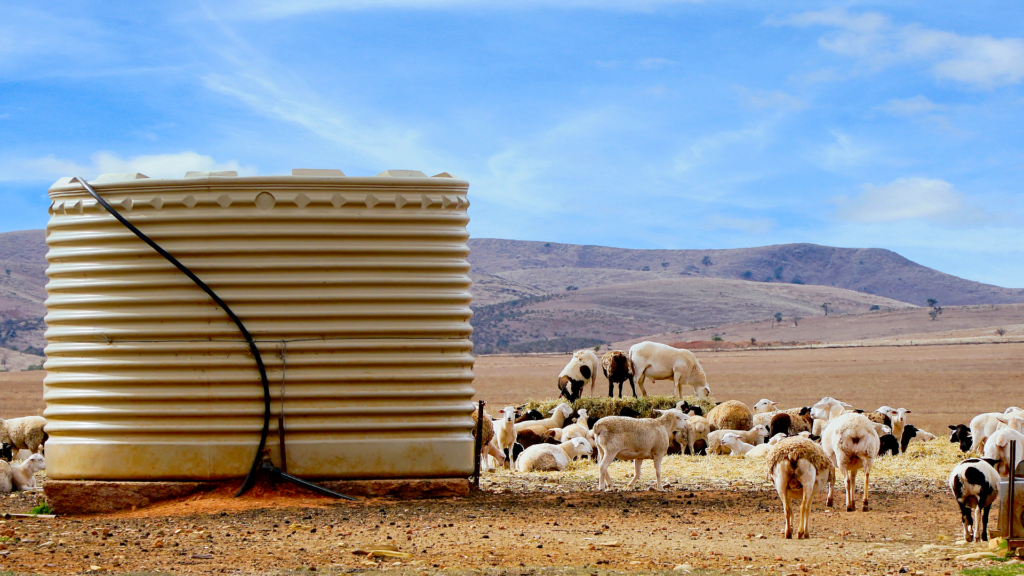
Modern agriculture has moved far beyond simple field irrigation. Advanced farming operations, including hydroponics and aquaculture, require precise and reliable water management that meets the highest standards of quality. Storage tanks hold safe, purified water that has been treated to be free of pathogens and heavy metals for food safety and livestock health. In hydroponic and aquaponic operations, tanks serve as nutrient reservoirs for mixing water with fertilizers to feed crops directly. For livestock, large capacity tanks guarantee a constant supply of drinking water to protect animals from droughts or failing equipment.
Office Complexes and Residential Developments
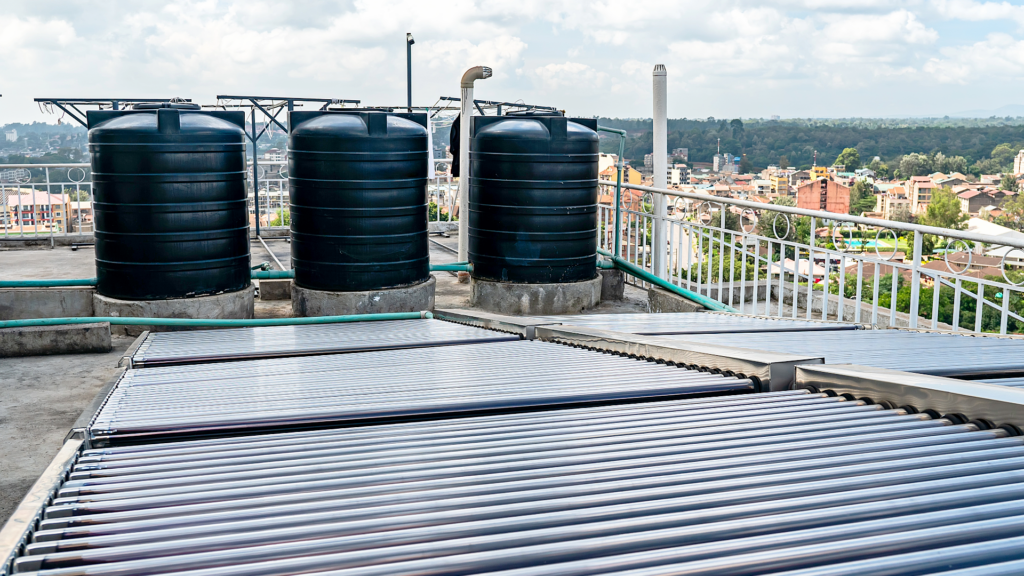
It is a constant engineering challenge to maintain water pressure on the upper floors of high rise office buildings and residential apartments. In these scenarios, rooftop or basement storage tanks are often used in conjunction with booster pumps to deliver consistent pressure to every fixture. Beyond daily needs, these tanks also often serve a dual purpose as fire protection reservoirs to hold a dedicated volume of water for use by fire suppression systems. Such setups can be used to make a building compliant with safety codes and protected against emergencies.

Data Centers
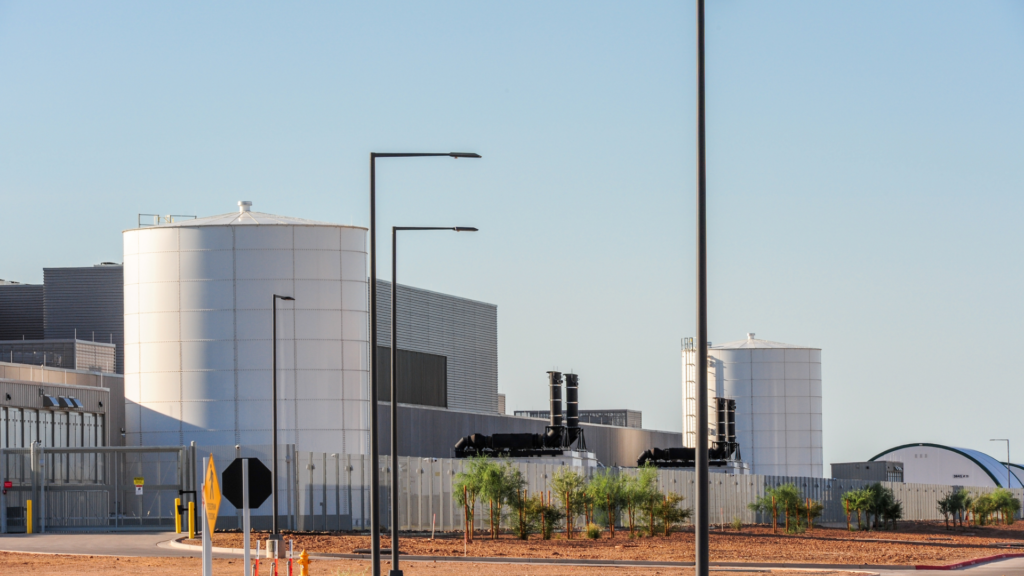
In today’s technological world of computers and unending stream of customer data, data centers are now vital commercial assets. Due to the number of servers and electricity, these facilities generate significant amounts of heat. To combat the heat and maintain safe operating temperatures, data centers often make use of water cooling or water mixture systems to maintain safe operating temperatures for servers.
For these systems, storage tanks provide the thermal mass or makeup water needed by cooling towers, evaporation units, and circulation lines. High capacity onsite storage tanks offer an immediate backup for systems in the event of a power outage or water supply failure to prevent server overheating and damage and meet uptime demands.
How National Tank Outlet Supports Commercial Water Treatment
Designing and completing a commercial water treatment system requires a partner with the right products, expertise, and the commitment to work together for long term success—that’s us—the National Tank Outlet (NTO). We offer comprehensive solutions to build the system and achieve the performance you desire for your commercial application. NTO is here to ensure every part of your water storage system is optimized for performance, purity, safety, and compliance. We can work alongside facility managers, engineers, and business owners to deliver the infrastructure and results you need.
Comprehensive Product Range
At NTO, we know every commercial application is unique. That’s why we have an extensive catalog of storage solutions for every need. Our selection includes durable polyethylene tanks for raw water intake, large storage tanks for bulk water storage, cone bottom tanks for sediment separation and complete drainage, and chemical storage tanks for chemical dosing and treatment tasks. No matter the stage of your water treatment system, we have the right tank for your operation, and if we don’t, we will help point you in the right direction.
Expert Consultation
Choosing the right tank will mean matching volume capacity and understanding chemical compatibility, flow rates, and regulatory standards. Our team of product specialists can provide expert consultation to guide you through the selection process to picking the best tank. We can help analyze your specific needs to determine the best material—whether HDPE, fiberglass, or steel—and verify your chosen tank meets all size and scale needs requirements for both now and in the future.
Customization Services
When a standard tank does not have all the needed features or will not fit into your facility, the National Tank Outlet builds custom tanks and offers tank customization services. We can engineer a tank to your exact specifications, including custom dimensions for tight spaces, non-standard shapes, weatherproof coatings for outdoor durability, and specific fittings or manways for direct integration with existing plumbing.
Commitment to Quality
Our commitment to quality is unwavering—for responsibility, trust, and our customers’ success. We only source proven, USA made tanks that are tested, certified, and passed industry standards including NSF/ANSI 61, ASTM, CFR, and FDA guidelines for potable water and chemical storage as applicable. By partnering with trusted manufacturers known in their field, we can provide the products and infrastructure to ensure your investment is built to last.
Proven Success
Our track record speaks for itself. We’ve delivered storage tanks and custom solutions for countless commercial projects across industries ranging from hospitality and healthcare to manufacturing and agriculture for decades. Our clients’ success stories prove we provide the dependable, real world tank products companies need to overcome their working challenges and keep operations running.
Turnkey Solutions
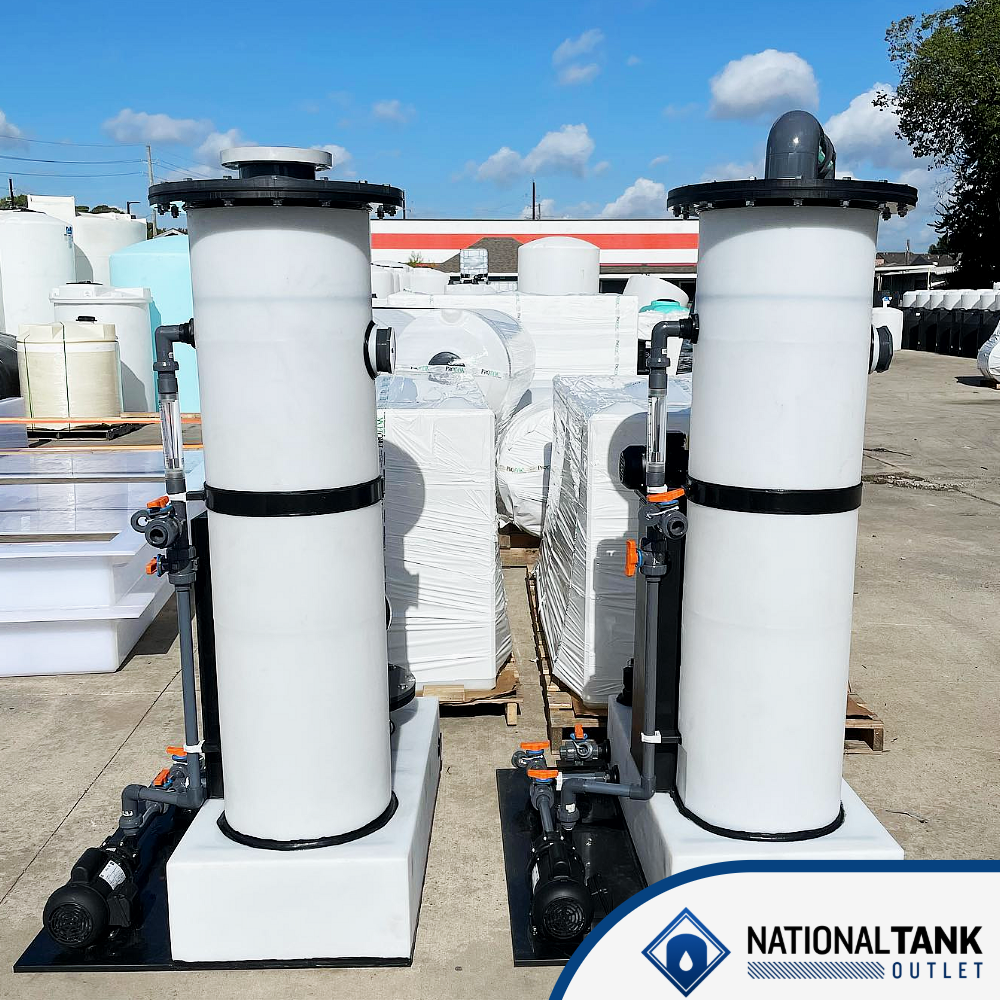
To simplify procurement and installation, we offer complete product solutions to bundle tanks with all the necessary components. These products can include integrated fittings, pumps, and advanced monitoring equipment like level sensors and leak detection systems. We also have partners in large capacity steel and fiberglass tanks and plumping equipment. Contact us for more information on what we offer and what all we can do for you.
Takeaway
In commercial water treatment, storage tanks are essential to the role, and the right infrastructure will support every phase—from storing raw resources to dosing chemicals and distributing clean water. National Tank Outlet stands at the forefront of this essential industry and stands dedicated to providing the reliable, compliant, and customizable solutions for modern business applications.
By combining our vast product catalog with expert consultation and turnkey support, NTO will help get your facility equipped to handle today’s challenges and be prepared for tomorrow’s growth. As the industry evolves toward smarter setups, innovations like smart tanks with remote monitoring and automatic monitoring systems offer real time data and report logging capability to bring you the latest advancements in water storage technology directly to your facility.
Ready to start on or improve your commercial water treatment system?
Explore our comprehensive catalog of commercial water treatment tanks today or contact our team of experts and schedule a consultation. Whether you need a custom tank or a quick ship solution, we are here to help you build your system. Request your free quote now and experience the difference NTO can make.
